Hymns for a Mascot: The Congregations Keeping Dead Brands Breathing
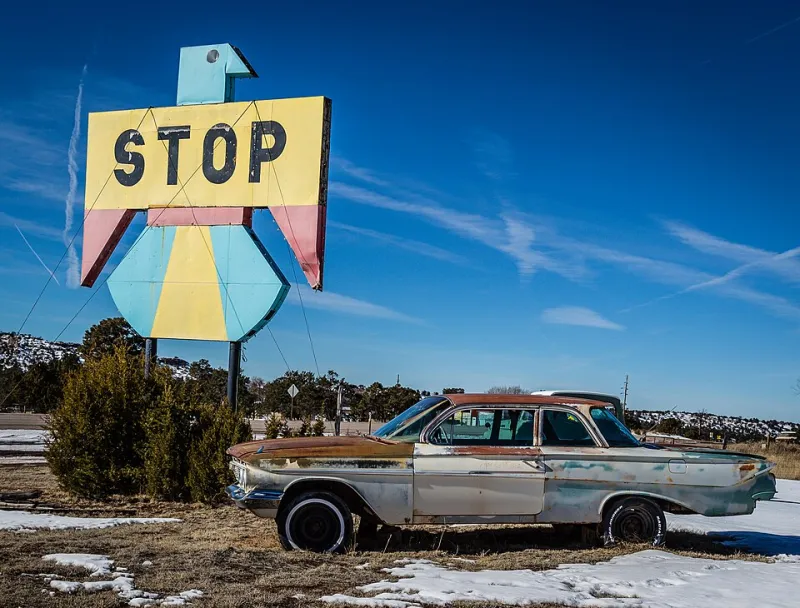
Photo: Mobilus In Mobili, CC BY-SA 2.0, via Wikimedia Commons
There's a subreddit where people post photos of a defunct fast-food chicken the way you'd post photos of a grandmother who passed. There's a Discord server — several, actually — dedicated to a retail chain that filed for bankruptcy before some of its members were born. There is a man in Ohio who runs a museum-quality archive of packaging from a snack brand that hasn't existed on shelves since the Clinton administration.
None of these people are being paid. None of them are expecting a resurrection. And yet they keep showing up, posting, archiving, arguing about lore. The product is gone. The corporation is dissolved. But the brand — the face, the mascot, the jingle, the vibe — is somehow still metabolizing attention in 2025.
Somewhere along the way, Americans started grieving logos like relatives. And nobody wants to talk about why.
The Mascot Outlived the Company
Here's the thing about a brand: it was never really about the product. A burger is a burger. A pair of jeans is a pair of jeans. What made you loyal was the character — the talking dog, the smiling cup, the jingle that lived in your skull rent-free for thirty years. Corporations spent billions building these little mythological figures and beaming them into every living room in America.
Then the merger happens. Or the bankruptcy. Or the rebrand that everyone hated. The mascot gets retired, the stores get gutted, the sign comes down. But the character? The character keeps living in people's heads. And unlike a person, a mascot doesn't die of old age. It only dies if people stop remembering it — and these communities have decided that will never happen.
Scroll through any of these fandoms and you'll find fan art of the mascot as a saint, elaborate fan theories about the mascot's "backstory," recipes reverse-engineered from discontinued menu items, and long, sincere comment threads about the first time someone saw the commercial. It reads like folklore. It reads like a cult. It reads like both, because it's functionally indistinguishable from either.
Irony Is the Gateway Drug
The standard explanation is nostalgia, and that's true as far as it goes. But nostalgia alone doesn't explain the 22-year-old with a tattoo of a defunct pizza chain's mascot.
A lot of this begins as a bit. Ironic fandom is the on-ramp — you post a dead mascot ironically, because loving something sincerely is scary but loving it as a joke is safe. Then the joke runs for five years and somewhere in there it stops being a joke. This is the standard lifecycle of internet sincerity: irony as camouflage, then irony as incubation, then sincerity with plausible deniability. Nobody has to admit they care. They just keep posting.
The result is a weird hybrid faith — half shrine, half shitpost — where the joke itself becomes the ritual. You don't have to believe in the mascot. You just have to show up.
We Grieve Logos Better Than We Grieve Anything Else
Here's the uncomfortable part. Americans are, by most measures, increasingly disconnected — from churches, from neighborhoods, from stable employment. What we still have in common is consumption. We grew up in food courts and strip malls and Saturday-morning commercial blocks. The brand was the public square.
So when a chain dies, what people are actually mourning isn't the fries. They're mourning the version of themselves that existed when those fries meant something — the birthday party, the road trip, the after-school ritual. The logo is just the hook the memory hangs on. And unlike actual memory, which decays, the logo is a stable artifact. It doesn't change. It doesn't disappoint you. It doesn't move away or stop calling.
That's why these fandoms can be more devoted than fandoms for living brands. A living brand can rebrand, apologize, get bought out by a private equity firm. A dead brand can't betray you. It's frozen at its best moment. It's the perfect parasocial object — all memory, no risk.
The Corporate Séance
Companies have noticed. Every few years, some conglomerate resurrects a dead mascot for a limited-time campaign, milking the fandom it didn't build and had forgotten existed. And every time, the internet erupts with the joy of people being seen — followed, three days later, by the bitterness of people being harvested.
Because that's the tension at the heart of all this: these communities love something that was engineered to love them back. The affection is real; the affection was manufactured. And the fans know it. They know the mascot was a marketing asset, know the nostalgia is a lever, know the whole thing was designed to extract feeling. They worship it anyway.
Maybe that's the most American thing about it. We knew the gods were fake. We loved them anyway. And now, long after the corporations have moved on, the congregation keeps the candles lit — not for the product, and not really for the company, but for the small, extinct world the logo used to stand in front of.