The Art of Watching Nothing: How Ambient Streaming Became Gen Z's Wallpaper
Photo: Palm Beach Police Department, Public domain, via Wikimedia Commons
Somewhere on Twitch right now, approximately 300 people are watching a crackling fireplace. The fire doesn't do anything remarkable. Nobody is hosting it. There's no chat interaction, no drops, no raid alerts. The flames move. The logs shift occasionally. That's it. Those 300 people have been there for hours.
This is ambient streaming — and if you haven't noticed it yet, you've been missing one of the quieter, stranger developments in how people actually consume media in 2024.
The Rise of Content You're Not Supposed to Watch
The conventional framework for streaming content assumes a viewer who is paying attention. The whole architecture of engagement metrics, retention curves, and recommendation algorithms is built around the idea that attention is the product being exchanged. You give a platform your eyes; the platform gives you stimulation.
Ambient streaming breaks that contract deliberately.
Channels like the long-running "Fireplace for Your Home" on Netflix — which has existed in various forms since the early streaming era — were initially novelty items, seasonal content for people who wanted fake Christmas ambiance. But something shifted over the past few years. The genre didn't just survive; it metastasized.
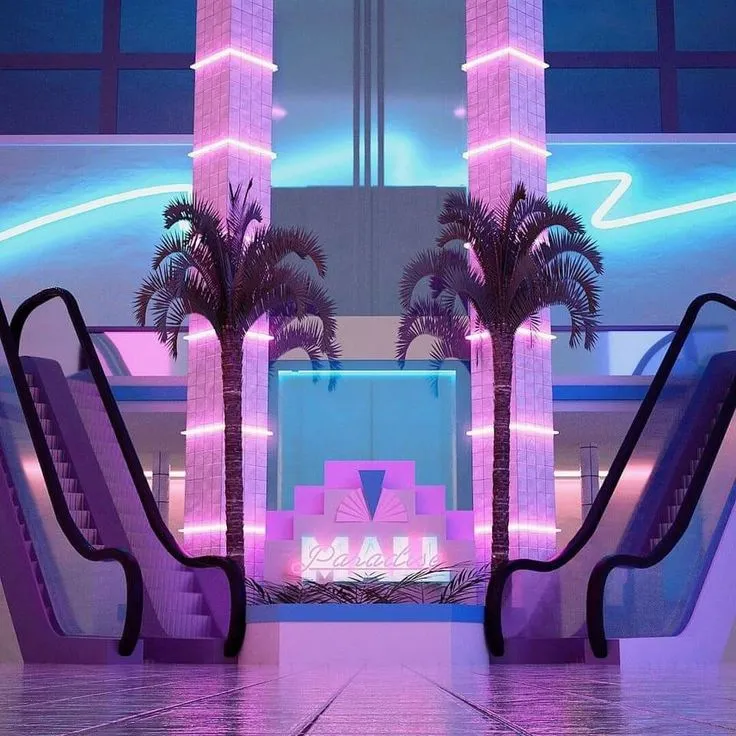
Now you've got 24-hour lo-fi rain channels with tens of thousands of concurrent viewers. Static noise streams that run indefinitely. YouTube channels dedicated to the ambient sounds of locations that no longer exist — a diner in Cincinnati that closed in 2007, a specific hallway in a mall that got demolished. And then there's the genuinely weird end of the spectrum: lo-fi haunted house streams where the camera slowly pans through dark rooms and nothing ever happens, accumulating parasocial audiences who return every night.
This isn't niche anymore. It's a genre.
Passive Consumption as Aesthetic Position
To understand why this is culturally interesting rather than just a footnote about attention spans, you have to think about what it means to choose content designed to be ignored.
There's a generational dimension here that's worth naming. Gen Z came of age in a media environment of almost pathological density — infinite scroll, autoplay, notification stacks, the perpetual background radiation of content competing for the same fractured attention. Choosing to stream a fireplace isn't laziness or disengagement. It's a stance. A kind of negative space carved out against the expectation of stimulation.
Brian Eno, who basically invented the concept of ambient music in the late 1970s, described his intention as creating something that could be "either actively listened to with attention or as easily ignored, as interesting as it is ignorable." What's happening in streaming culture right now is Eno's framework applied to visual media at scale, except the people doing it mostly haven't heard of Brian Eno and arrived at the same place through completely different routes.
The lo-fi hip-hop girl studying at her desk — that perpetually looping YouTube stream that became genuinely iconic — was probably the mainstream inflection point. But the genre has since fragmented into something much stranger and more varied than chill study beats.
The Haunted House Problem
The most interesting subset of ambient streaming, and the one that most clearly reveals what's actually going on culturally, is the horror-adjacent end of the spectrum.
There are channels — some on Twitch, some operating through more obscure platforms — that stream slow, dark footage of abandoned or supposedly haunted spaces. The content almost never delivers on any conventional horror premise. The camera moves. Shadows shift. Occasionally something ambiguous happens in a doorway. Nothing is explained. Viewers come back night after night.
This format sits in genuinely uncomfortable territory between entertainment, meditation, and psychological experiment. It's using the grammar of horror — the dark rooms, the slow pan, the implication of presence — without any of the conventional payoffs. No jump scares, no narrative resolution, no catharsis. Just sustained, low-grade atmospheric dread, delivered on a loop.
Viewers in these channels' chat sections describe using the streams as sleep aids. As background texture for anxiety. As something to have on while they're doing other things that requires just enough sensory engagement to crowd out intrusive thoughts. The haunted house, it turns out, is therapeutic if it never actually does anything.
Where Entertainment Ends and Something Else Begins
The collapse of the line between entertainment and ambient experience is happening faster than most media criticism has caught up with.
Traditional TV criticism assumes a viewer who is watching. Traditional wellness content assumes a user who is meditating. Ambient streaming exists in the gap between those two frames — it's neither being watched nor being used for conventional relaxation. It's something closer to what architects call "activated space" — an environment that's alive enough to register but undemanding enough to recede.
Some creators working in this space are doing it with genuine artistic intentionality. There are streamers who think carefully about the phenomenology of their content, who are making deliberate choices about what to include and exclude, who understand themselves as working in a tradition that runs from Eno through Mark Rothko through John Cage. Most of them have small audiences and no mainstream visibility.
Others are purely algorithmic — channels that exist because ambient content generates watch time, and watch time generates revenue, and the formula works regardless of whether anyone is actually engaged. The cynical version and the genuinely artistic version look almost identical from the outside, which is part of what makes the whole genre so strange to navigate.
The Screen That Asks Nothing
What ambient streaming ultimately represents is a renegotiation of what screens are for.
For most of the history of consumer media, screens were portals to content that demanded engagement. The screen looked at you; you looked back. The exchange was the point.
Ambient streaming treats the screen as furniture. As wallpaper. As a kind of technological hearth — something to orient a room around, to generate a sense of presence without requiring participation. The fireplace channel isn't a failure of imagination. It's a pretty radical reimagining of what a screen can be in a room.
For a generation that grew up with screens as the primary architecture of their social and psychological lives, choosing to use that architecture to generate deliberate emptiness might be the most interesting design decision in contemporary media culture.
The content is nothing. The choice to watch it is everything.