Error as Aesthetic: The Glitch Artists Turning Broken Pixels Into High Art
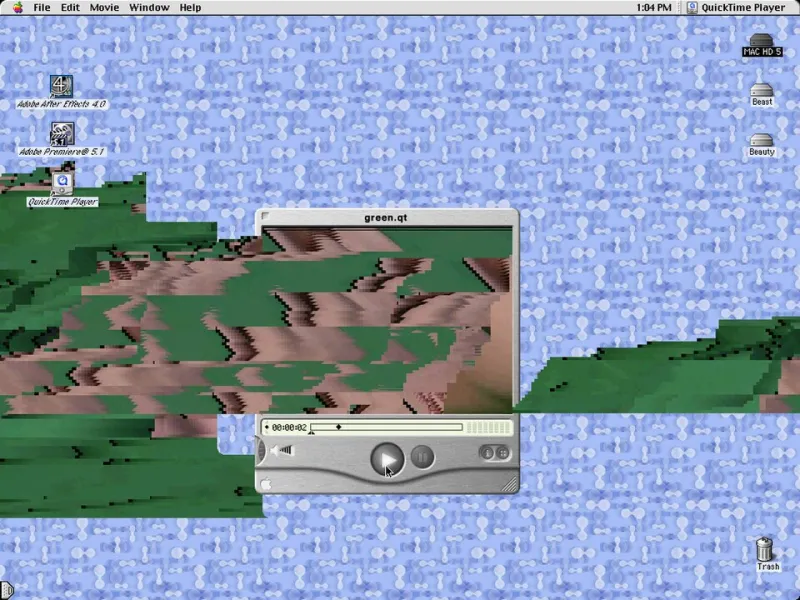
Photo: jonCates, CC BY-SA 4.0, via Wikimedia Commons
There's something deeply satisfying about a broken screen. Not the panic-inducing kind — not the cracked iPhone moment — but the other kind. The kind where a JPEG loads sideways, colors bleed into each other like a fever dream, and for one uncanny second, the image looks more real than anything your phone's camera could produce in HDR. That feeling? Artists have been chasing it deliberately for decades. And somewhere along the way, the rest of the world caught up.
Glitch art — the intentional manipulation of digital files to produce corrupted, fragmented, or distorted visual output — has gone from a niche corner of internet experimentation to a fully recognized aesthetic movement. You've seen it on album covers. You've seen it in Supreme drops and Balenciaga campaigns. You've seen it in the visual identity of brands that want to signal they understand the internet on a cellular level. The question worth asking is: how did beautiful failure become this valuable?
From Accident to Intention
The roots of glitch art aren't in galleries — they're in cassette tapes. In VHS tracking errors. In the weird visual noise that crept into analog signals before digital took over and promised to clean everything up. Artists like Nam June Paik were already manipulating video signals in the 1960s and 70s, treating electronic noise as a medium rather than a problem. But the movement as we recognize it now — pixel-bent, data-moshed, deliberately corrupted — really crystallized in the late 2000s and early 2010s, when artists like Rosa Menkman, Takeshi Murata, and the broader Tumblr-era internet underground started treating .jpg artifacts and codec failures as raw materials.
Menkman's 2010 Glitch Studies Manifesto is probably the closest thing the movement has to a founding document. Her argument was essentially this: the glitch isn't a failure of the system — it's the system revealing itself. Every digital image is a set of instructions pretending to be reality. When those instructions break down, you see the scaffolding. You see the lie. And that exposure, she argued, is more honest than the polished surface it interrupts.
That's a genuinely radical idea, and it landed differently depending on who was reading it. For artists, it was permission. For technologists, it was provocation. For a generation raised on Instagram filters and Facetune, it would eventually become something more complicated: a kind of relief.
The Gen-Z Connection
Here's the thing about growing up in a hyper-curated digital environment: you develop a finely tuned radar for fakeness. Gen-Z — the first generation to have their childhoods genuinely documented on social media — has been subjected to an unprecedented volume of performance. Perfect skin. Perfect aesthetics. Perfect lives assembled from carefully selected moments and edited into coherence. The psychological toll of that is well-documented at this point. The aesthetic response to it is glitch.
When artists like Sabato Visconti or collectives like JODI produce work that looks broken, corrupted, or wrong, they're not being nihilistic. They're being honest. The glitch says: the image is a construction, the interface is a layer, and underneath all of it is something messier and more interesting than what you're being sold. For young audiences who grew up watching influencer culture collapse under its own artifice, that message hits different.
This is why glitch aesthetics spread so organically through spaces like early Tumblr, then SoundCloud, then TikTok's more experimental corners. It wasn't trend-chasing. It was a genuine visual vocabulary for a generation that was deeply suspicious of polish.
When the Gallery Calls
The art world's embrace of glitch work has been, predictably, complicated. On one hand, institutions like the Museum of the Moving Image in New York and various digital art festivals — Ars Electronica, FILE Festival — have given glitch artists serious platforms and serious critical attention. That legitimization matters. It funds work, enables larger projects, and forces the broader culture to reckon with digital art as art.
On the other hand, the gallery context strips something from the work. A glitch on your screen while you're scrolling at 2am has an intimacy and immediacy that a framed print in a Chelsea gallery can't quite replicate. The medium is part of the message, and moving it into a white cube changes what it's saying. Some glitch artists are completely fine with this trade-off. Others have made the tension itself part of their practice — creating work that behaves differently in institutional contexts versus online, that comments on its own commodification.
The fashion industry's adoption of glitch aesthetics is where things get genuinely weird. When Balenciaga uses distorted imagery in a campaign, or when a streetwear brand drops a hoodie with a corrupted-logo graphic, the subversive content of the original movement gets laundered into luxury signaling. The glitch becomes a style rather than a statement. It's the same thing that happened to punk, to grunge, to every subculture that ever made itself visible enough to be monetized. The symbols survive the ideology's extraction.
The Technical Side of Beautiful Failure
Part of what makes glitch art compelling — and what separates serious practitioners from people just slapping a Photoshop filter on something — is that it requires genuine technical fluency. Databending, the practice of opening non-text files in text editors and modifying the raw data, produces unpredictable and often stunning results but requires understanding enough about file structure to know what you're breaking and how. Circuit bending, pixel sorting, datamoshing through video codec manipulation — these are craft skills with learning curves.
Artists like Kim Asendorf, whose pixel-sorting algorithm became one of the defining visual techniques of early 2010s internet art, built their practices on deep technical knowledge combined with genuine aesthetic sensibility. The best glitch work doesn't look like an accident — it looks like an accident that someone understood well enough to make intentional.
What the Error Is Telling Us
At its core, glitch art is about technology's relationship with truth. Every digital image is already a translation — light into data into pixels into perception. The glitch makes that translation visible. It reminds you that the clean surface of your screen is a negotiated reality, not a window.
In a cultural moment when AI-generated imagery is making it genuinely difficult to trust what you see, when deepfakes are a political weapon, when the entire visual fabric of the internet is increasingly synthetic — the glitch feels more relevant than ever. It's not just aesthetic anymore. It's almost epistemological. The broken image that shows its seams might be the most honest image in the feed.
That's a lot of weight for a corrupted JPEG to carry. But then again, the best art usually punches above its apparent weight class. The glitch always did.