Haunted by the Mall: Why Vaporwave Became Gen Z's Church

Photo: vaporwave aesthetic neon mall corridor retro digital art, via i.pinimg.com
Vaporwave was supposed to be a joke—a glitchy, pastel-soaked parody of consumer culture that peaked sometime around 2013 and dissolved into meme noise. But something strange happened on the way to its funeral: Gen Z moved in. Not ironically. Not as a throwback flex. They moved in the way people move into old houses with strange histories—drawn to the weight of the walls, the feeling that something important happened here once.
This is the story of how a dead aesthetic became a living religion.
The Original Sin of Nostalgia
To understand why vaporwave still pulls, you have to understand what it was actually doing in the first place. The genre—if you can call it that, because it's really more of a mood—emerged from SoundCloud and Tumblr in the early 2010s, built from slowed-down smooth jazz samples, Muzak loops, and the synthetic shimmer of 80s corporate optimism. Artists like Macintosh Plus and Saint Pepsi weren't celebrating that era so much as autopsying it. The gleaming promise of the American mall, the fluorescent future that capitalism sold on VHS, all of it run through a degrading tape machine until it sounded like a ghost trying to remember being alive.
The joke was always on the dream. And that's exactly why it landed.
For millennials, vaporwave hit as satire with teeth—a knowing smirk at the plastic paradise their parents bought into. But Gen Z, who came of age inside the wreckage of 2008, pandemic isolation, and algorithmic anxiety, heard something different in those warped saxophone lines. They heard grief. Real grief. Not for an era they lived through, but for a future that was promised and quietly canceled before they could collect.
Discord as Sacred Space
Log into the right Discord servers and you'll find entire communities organized around vaporwave not as music but as philosophy. Servers with names like Liminal Frequencies or Aesthetic Void function less like fan clubs and more like reading groups—people sharing not just album recommendations but essays, lo-fi visual art, and long-form discussions about what it means to feel temporally displaced in a world that moves too fast to mean anything.
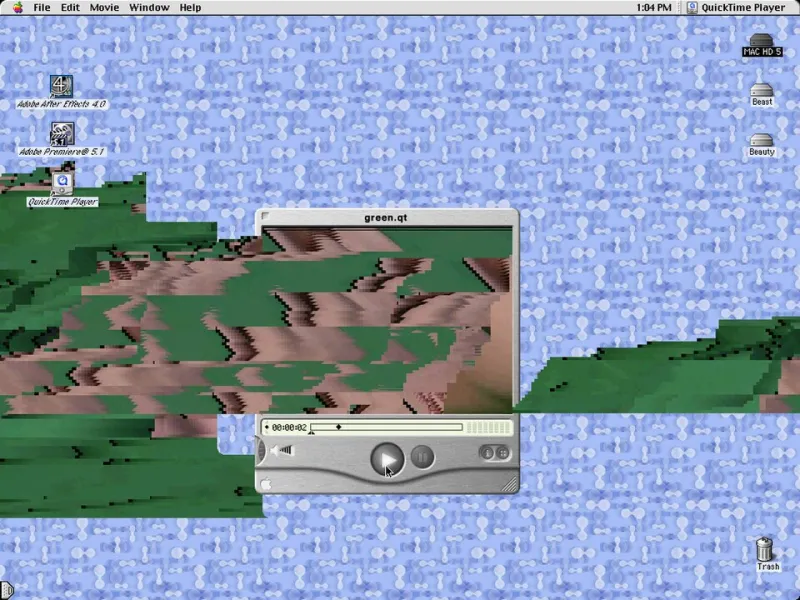
The recurring word in these spaces is liminal. As in the threshold. The space between what was and what comes next. Vaporwave's visual grammar—empty mall corridors, Roman busts floating in digital pink fog, Windows 95 screensavers bleeding into ocean footage—is essentially a catalog of liminal spaces. Nowhere places. Transition zones where time gets soft.
For a generation that grew up online, where identity is perpetually in flux and the physical world often feels like a loading screen for something that never quite renders, that vocabulary hits different. It's not escapism exactly. It's more like recognition.
TikTok and the Resurrection
The resurgence has a platform: TikTok. Specifically, the corner of TikTok that runs on 3am energy—lo-fi playlists, liminal space photo dumps, aesthetic compilations set to slowed reverb edits of tracks that were already slowed-down to begin with. The algorithm, in its infinite chaotic wisdom, kept feeding these videos to teenagers who didn't have a name for what they were feeling, and suddenly they had one.
Vaporwave TikTok isn't about nostalgia for the 80s or 90s. Most of these kids weren't there. It's about the feeling those eras projected—a sense that the future was a place you could actually go, a destination with a brochure. Late-stage capitalism ate that brochure. Vaporwave plays the funeral music.
Underground producers are feeding the moment too. Labels like Dream Catalogue and Beer on the Rug never really stopped releasing material, but a new wave of bedroom producers—many of them in their teens—are pushing the sound into stranger territory. More drone. More silence. More willingness to sit inside discomfort rather than smooth it into something pretty.
Spiritual Residue
Here's the part that gets genuinely interesting: some of the communities aren't just using vaporwave as an aesthetic. They're using it as a framework for meaning-making. Which sounds grandiose until you spend an hour in one of these Discord channels and watch someone explain, with complete sincerity, how listening to Floral Shoppe at 2am helped them process their anxiety about climate change.
The connection isn't arbitrary. Vaporwave has always been about mourning futures that didn't happen. That's an incredibly useful emotional technology for a generation inheriting a world of compounding crises and diminishing promises. The corrupted mall isn't just a visual gag—it's a symbol of an economic system that sold transcendence and delivered a food court.
Finding beauty in that ruin, sitting with it, making art about it—that's a spiritual practice whether anyone calls it that or not.
Some communities have gone further, weaving in actual philosophical texts. Byung-Chul Han's writing on burnout culture circulates alongside album recommendations. Mark Fisher's Capitalist Realism—his devastating argument that it's easier to imagine the end of the world than the end of capitalism—shows up constantly, sometimes explicitly, sometimes just as a vibe that hangs over the whole conversation.
Fisher, who died in 2017, would have had complicated feelings about his ideas becoming part of an aesthetic movement. But there's something fitting about it. He wrote obsessively about hauntology—the way certain sounds and images carry the ghost of lost futures. Vaporwave is hauntology's most accessible commercial product.
The Void Has Good Wi-Fi
What does it mean that young people are finding community and spiritual sustenance in an aesthetic built from corporate wreckage? Maybe it means that the margins of digital culture are doing work that traditional institutions have stopped doing. The church attendance numbers, the civic participation stats, the trust-in-institutions surveys—they all tell the same story. The center isn't holding.
So people find the edges. They find each other in servers dedicated to a music genre that was technically dead before most of them were in high school. They share art and essays and playlists and something that functions like prayer—the act of sitting with hard feelings and refusing to look away.
Vaporwave didn't survive because it was ironic. It survived because somewhere underneath the pastel glitch and the warped saxophone, it was telling the truth about how it feels to live inside a broken promise. And that truth, apparently, doesn't have an expiration date.
The mall is haunted. Gen Z bought a candle and moved in.