The Keepers of Useless Truth: Inside the Obsessive World of Hyperspecialized Internet Archivists
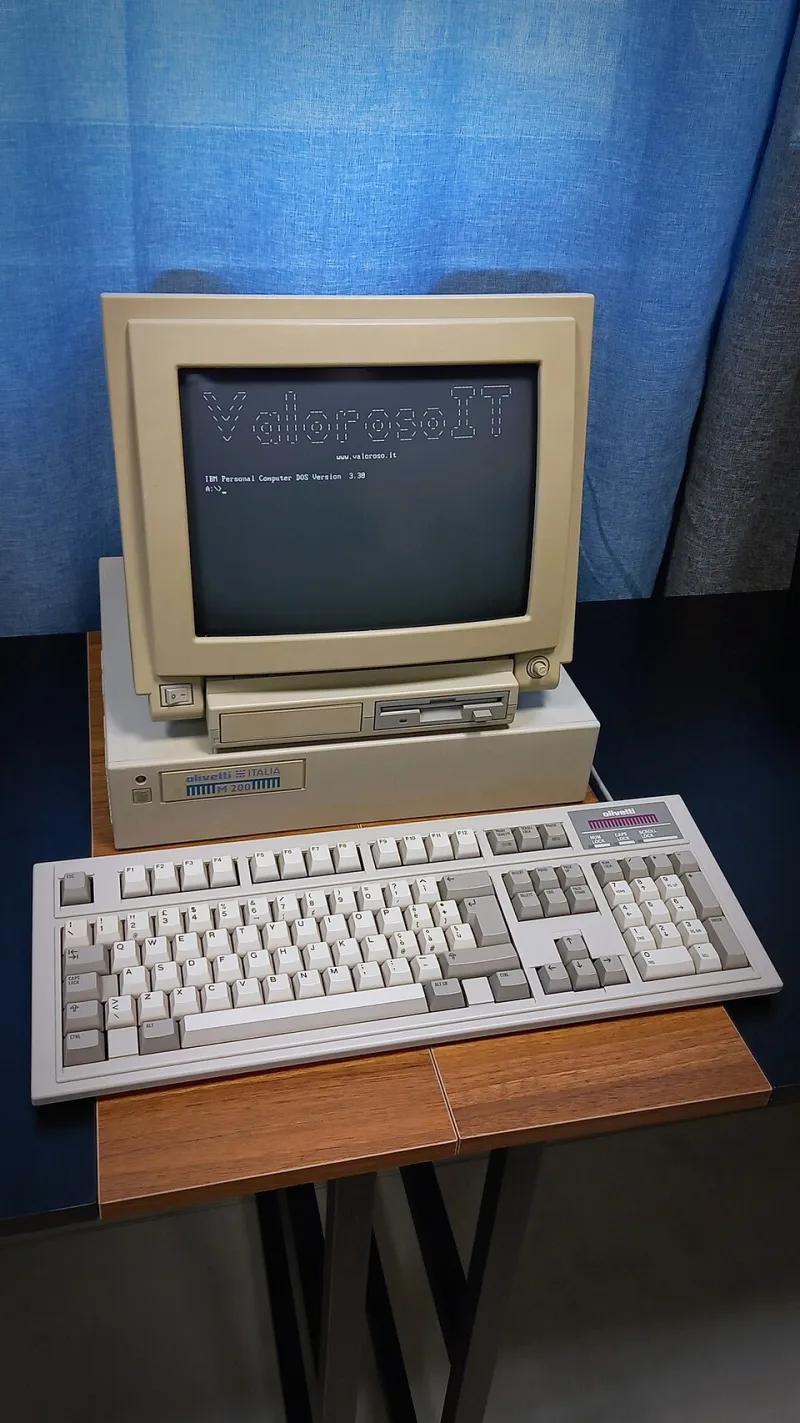
Photo: ValorosoIT, CC BY-SA 4.0, via Wikimedia Commons
Let's be honest about what we're talking about when we talk about niche wikis. We're not talking about Wikipedia. We're not talking about the Wayback Machine or the Internet Archive's tidy, institutional preservation work. We're talking about something messier, stranger, and in its own way more honest about what the internet actually is.
We're talking about a wiki with 847 articles dedicated exclusively to the lore of a Minecraft server that peaked at 200 concurrent users in 2013 and shut down two years later. We're talking about a Fandom page lovingly maintained by a single anonymous editor cataloguing every commercial variant of a regional fast-food chain that no longer exists. We're talking about archived forum threads from early 2000s paranormal discussion boards, preserved not because anyone thinks the ghost sightings were real, but because someone decided the conversations themselves were worth keeping.
This is the internet's attic. And the people tending it are doing something that looks, from the outside, like an extremely elaborate form of nothing.
The Taxonomy of the Forgotten
The hyperspecialized wiki occupies a specific evolutionary niche in the digital ecosystem. It's downstream from the obsessive fan wiki tradition — your WookieepediAs, your Memory Alphas — but it's not really about fandom in the conventional sense. The subjects these archives document aren't beloved franchises with active communities. They're things that were briefly loved and then mostly forgotten, with a small residual population of people who can't quite let them go.
Discontinued product wikis are one of the purest expressions of this. There are entire databases dedicated to cataloguing the complete variant histories of products like Surge, Crystal Pepsi, and the full taxonomy of every flavor of Snapple ever produced. These aren't just nostalgic fan pages. They're genuinely rigorous in their completeness — cross-referencing regional distribution data, documenting can design changes across production runs, citing old grocery store circulars as primary sources.
The people building these aren't doing it carelessly. They're doing it with the kind of focused attention that, in a different context, would get you published in an academic journal.
Sacred Repositories of Cultural Minutiae
Spend any time in these communities and you'll notice that the archivists themselves rarely describe what they're doing in terms of nostalgia. Ask them why they maintain a 400-article wiki about a defunct MMO and they'll give you an answer that sounds almost philosophical.
"It happened," one long-term contributor to a wiki documenting the lore of a dead browser game told me over Discord. "Thousands of people experienced this thing together. If nobody writes it down, it's like it never existed. That feels wrong to me."
That framing — it happened, therefore it deserves to be remembered — comes up again and again in these communities. It's not really about the specific content. It's about a conviction that cultural experience, however minor or niche, has inherent worth as historical record.
This is actually a more radical position than it sounds. The mainstream internet's memory is extraordinarily short and ruthlessly selective. Algorithms surface what's currently engaging. Platforms quietly deprecate old content. The cultural record that gets preserved by default is the record of what was popular, what was profitable, what was loud. The hyperspecialized archivist is explicitly pushing back against that logic.
The Paranormal Forum Problem
Some of the most fascinating archival work happening in these spaces involves early internet paranormal and fringe communities. Forums from the late 1990s and early 2000s where people traded ghost stories, UFO sighting reports, and elaborate conspiracy theories represent a genuinely unique historical artifact — a record of how a specific generation processed the uncanny through the new medium of online community.
Several dedicated archivists have spent years scraping, organizing, and annotating these forums before they disappear entirely. The work is painstaking. Many of the original sites are already gone, accessible only through incomplete Wayback Machine snapshots. The archivists are working against the clock, stitching together coherent records from digital fragments.
What they're preserving isn't the truth of what those forums discussed. It's the texture of how people talked to each other about things they couldn't explain. The social dynamics. The evolving slang. The specific flavor of early-internet credulity mixed with early-internet skepticism. That's a cultural document, even if nobody would call it one.
The Completionist as Artist
There's an aesthetic dimension to this work that tends to get overlooked when it's framed purely as preservation. The best hyperspecialized wikis have a quality that's hard to name but easy to recognize — a kind of exhaustive love that transforms the mundane into something almost monumental.
A complete catalog of every regional variant of a 1990s fast-food mascot, documented with the same precision a natural historian would apply to species classification, is doing something more than just recording facts. It's making an argument about what deserves attention. It's insisting, through sheer accumulated detail, that this thing — this silly, commercial, thoroughly forgotten thing — was real, and its reality mattered to someone.
There's a name for this sensibility in contemporary art circles: archival impulse. The drive to collect, organize, and present the overlooked as a way of questioning what we've decided is worth remembering. Artists like Mark Dion have built entire careers around it. The anonymous wiki editor documenting discontinued breakfast cereals is working in the same tradition, without the gallery show or the artist statement.
What Gets Lost When Nobody Keeps It
The stakes of this work become clearest when you consider what's already gone. Entire early internet communities — the GeoCities neighborhoods, the early forum ecosystems, the pre-social-media fan spaces — have vanished with essentially no record. The people who built them, who had formative experiences inside them, have no archive to point to. That corner of their cultural history simply doesn't exist anymore.
The hyperspecialized archivists are acutely aware of this. Many of them came to the work precisely because they watched something they cared about disappear and felt the particular grief of a thing being unmade by neglect. The wiki is a hedge against that grief — an attempt to ensure that whatever comes next, this at least will have been written down.
It's a quiet, unglamorous, mostly thankless kind of work. The wikis don't go viral. The archivists don't build large followings. The knowledge they're preserving will, in most cases, be consulted by a handful of people over the next several decades.
But it will be there. And in a digital landscape that treats memory as a bug rather than a feature, that stubbornness — that insistence on keeping the record — is its own kind of radical act.