Your Feed Knows Your Damage: The Eerie Intimacy of Being Seen by a Machine
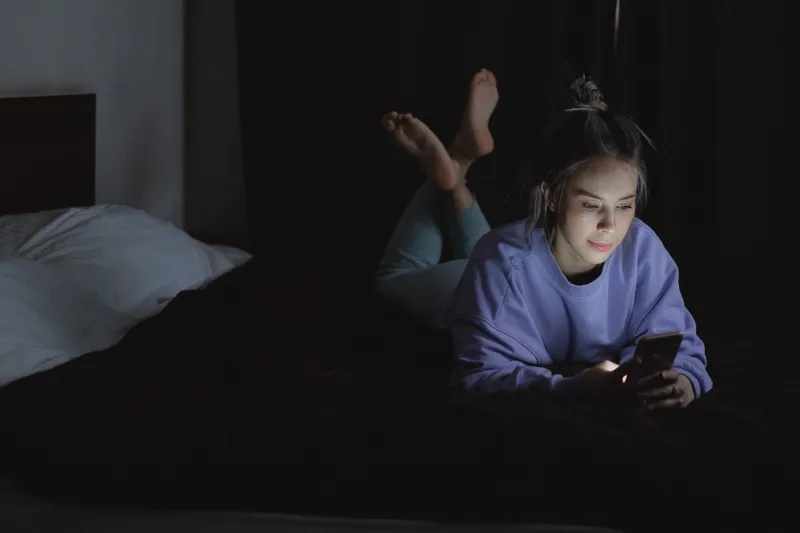
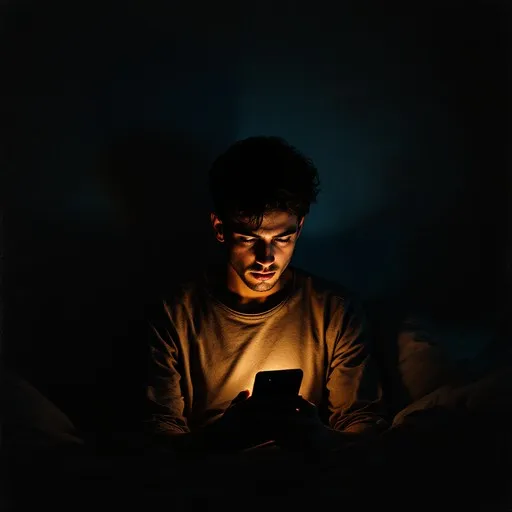
Somewhere around 2 a.m. on a Tuesday, a 24-year-old in Columbus, Ohio named Dani paused a TikTok video and just stared at her phone. The clip was a creator talking about the specific exhaustion of being the emotionally available friend — the one who checks in, who remembers, who holds everyone else's grief in her palms while quietly drowning in her own. Dani had never searched for that. She hadn't typed anything remotely close into a search bar. The algorithm just... knew.
"I literally texted my best friend a screenshot and said 'this app understands me better than you do,'" she told me over DMs. "And I meant it as a joke. But also I didn't."
This is the part nobody quite has language for yet — the moment when a recommendation engine stops feeling like software and starts feeling like a witness.
The Intimacy That Wasn't Supposed to Happen
TikTok's For You Page was engineered to maximize engagement. Full stop. The company has been relatively transparent about the signals it uses: watch time, replays, shares, comments, even the moment you hesitate before scrolling. It's a behavioral fingerprint system dressed up as entertainment, and it is extraordinarily good at its job.
But somewhere in the optimization math, something unintended emerged. Users started reporting a sensation that goes beyond relevance — a feeling of being known. Not just served content they enjoy, but served content that reflects something interior, something they hadn't articulated even to themselves.
Psychologists have a framework for part of this. Parasocial relationships — the one-sided emotional bonds people form with media figures — have existed since radio. What's new is the algorithmic layer sitting beneath those bonds, actively curating which parasocial relationships you form and when. Your feed isn't just showing you a creator you might like. It's constructing a personalized emotional environment in real time, tuned to your specific psychological frequency.
That's a different thing entirely. That's not a TV channel. That's something closer to a mirror that talks back.
What the Feed Is Actually Reading
Here's what makes this genuinely strange: the algorithm isn't reading your thoughts. It's reading your hesitations. The two-second pause before you scroll. The video you watched three times but never shared. The comment you typed and deleted. These micro-behaviors are extraordinarily revealing — often more revealing than what people say out loud to the humans in their lives.
In that sense, the For You Page has access to a version of you that most people never see. Not the curated self you post, not the performed self you bring to social situations — the reactive self, the one that flinches and lingers and quietly aches over things you haven't named yet.
A behavioral data researcher (who asked to remain unnamed because their employer has opinions about press) put it to me this way: "The algorithm isn't empathetic. It has no theory of mind. But it's processing signals that humans rarely bother to collect from each other. In that narrow sense, it knows more."
That "narrow sense" is doing a lot of work in that sentence. But it's also doing a lot of work in people's emotional lives.
The Friends Who Don't Ask
Let's be honest about what we're really talking about here, because the algorithm comparison only lands because of what it's being compared to.
A lot of Americans are lonely in a specific, modern way — surrounded by people, active in group chats, technically connected, but rarely feeling genuinely seen by the humans in their orbit. The intimacy deficit isn't about isolation in the old sense. It's about the gap between presence and attentiveness. Friends who are physically there but emotionally elsewhere. Families who love you but can't quite locate you.
Into that gap, the algorithm arrives. And it is relentlessly attentive, in its own data-driven way.
Marco, a 29-year-old in Chicago who works in logistics and describes his social life as "fine, I guess," told me he realized something was off when he caught himself feeling more emotionally understood by his FYP than by his roommate of three years. "My roommate doesn't know I've been struggling with, like, existential dread about getting older. But TikTok has been serving me content about it for months. It's been in the conversation longer than any human I know."
He laughed when he said it. The laugh had a complicated texture.
Feature, Bug, or Something Weirder
The question everyone eventually lands on is whether this algorithmic intimacy is doing harm or filling a genuine void. And the honest answer is probably: both, unevenly, depending on the person.
For some users, the FYP functions as a kind of emotional discovery tool — a place where they encounter language for experiences they hadn't been able to name, find communities they didn't know existed, feel less alone in something specific and weird and previously private. There's real value in that. Representation, in the broad sense, matters. Seeing your interior life reflected back at you matters.
For others, the algorithmic relationship quietly substitutes for the harder, messier work of being known by actual people. It's easier to feel understood by your feed than to be vulnerable with a friend. The feed never gets tired of you. It never redirects the conversation to itself. It never forgets what you care about.
That frictionlessness is exactly the problem. Human intimacy requires friction — the misunderstandings, the effort, the risk of being truly seen and possibly rejected. An algorithm that gives you the emotional payoff without the relational risk is, in a real sense, training you to expect connection without cost. Which is not how connection works.
The Void That Mirrors Back
What Voidframe keeps circling back to is this: the internet's strangest developments are rarely the ones that look strange on the surface. The truly weird stuff is the stuff that looks like comfort.
The For You Page looks like entertainment. It feels like companionship. And underneath both of those things, it's a system designed by a corporation to keep you watching, built on the premise that your loneliness is a resource to be optimized.
None of that makes the feeling less real. Dani's 2 a.m. moment of recognition was genuine — the video did reflect something true about her life, and that mattered. But the system that delivered it to her wasn't doing so out of care. It was doing so because her emotional resonance translated into watch time.
Being seen by a machine is real and hollow simultaneously. That's the specific dissonance of right now — that something can understand you and not care about you at all, and that distinction is getting harder and harder to feel in the moment.
Maybe the question isn't whether the algorithm knows you better than your friends. Maybe it's why your friends stopped trying to.